
Adventure · North India
Ladakh is where turquoise lakes mirror ochre mountains and ancient monasteries cling to cliffs above 3,500 metres — a landscape so elemental it rewires the senses. We route you through Khardung La, the colour-shifting shores of Pangong Tso and the sand dunes of Nubra, while handling every inner-line permit, acclimatisation rest day and altitude precaution so you arrive at each view fully present, never breathless from bureaucracy.
Cross one of the world's highest motorable passes at 5,359 m — a moment you'll recall for a lifetime.
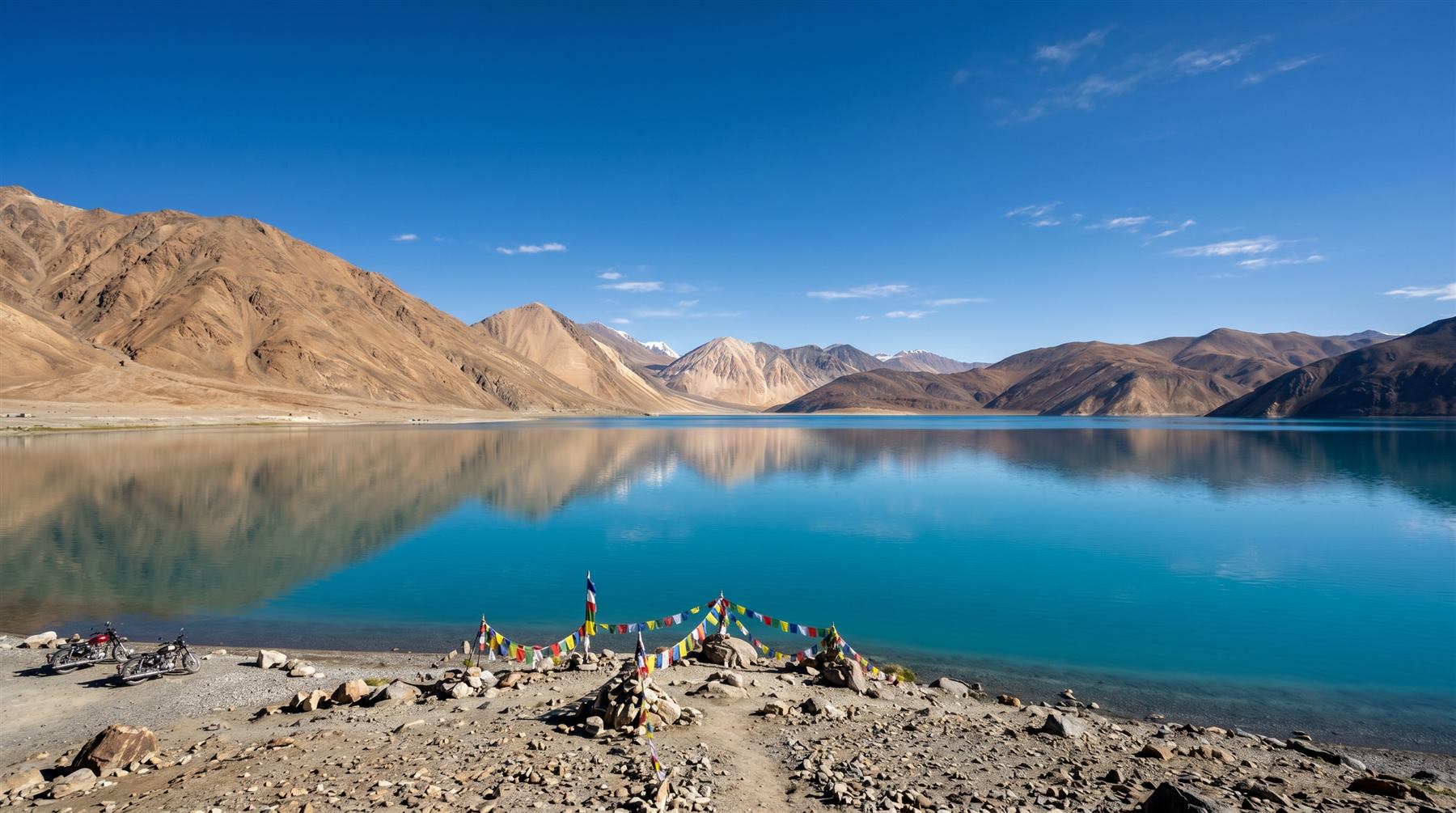
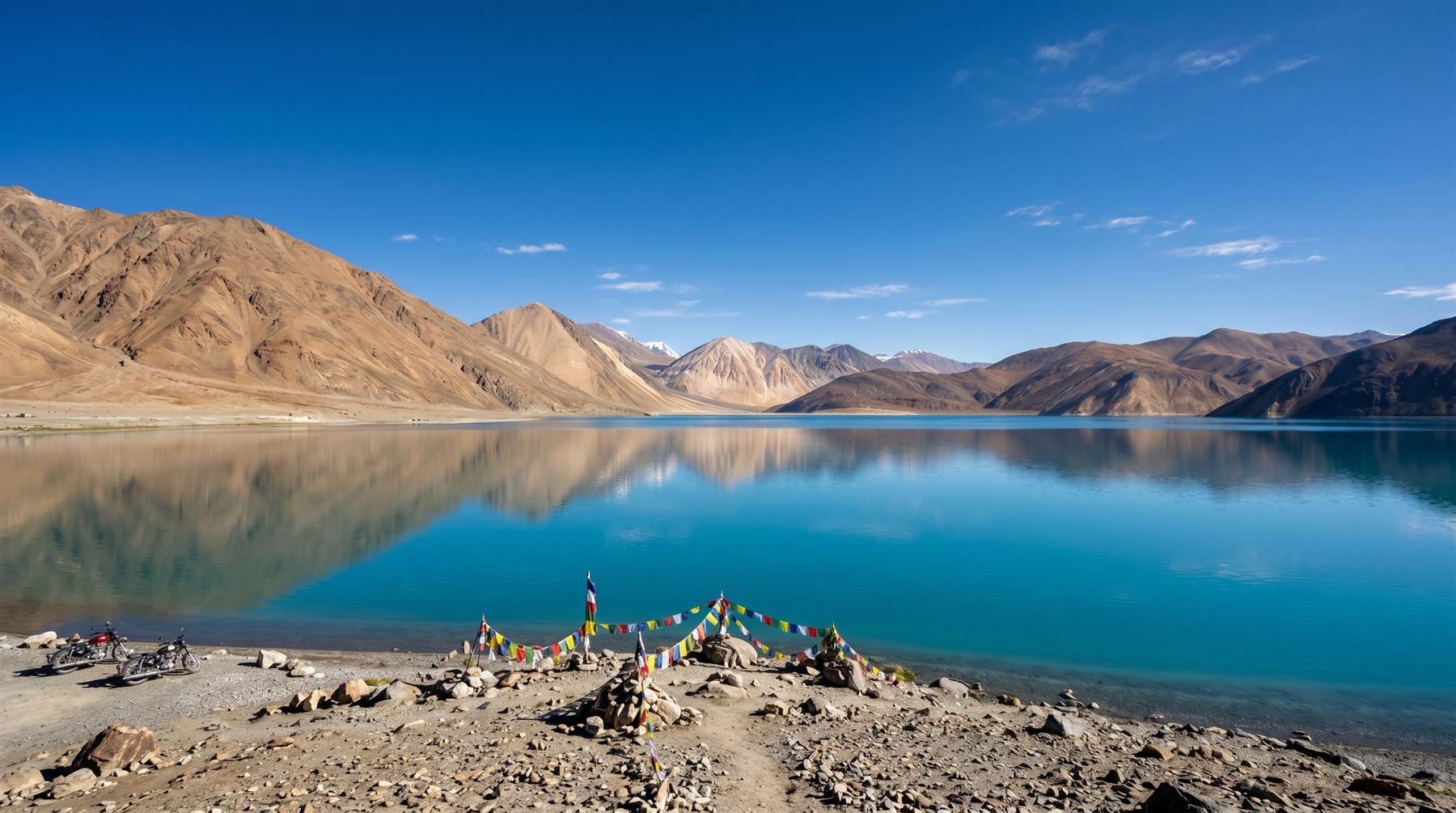
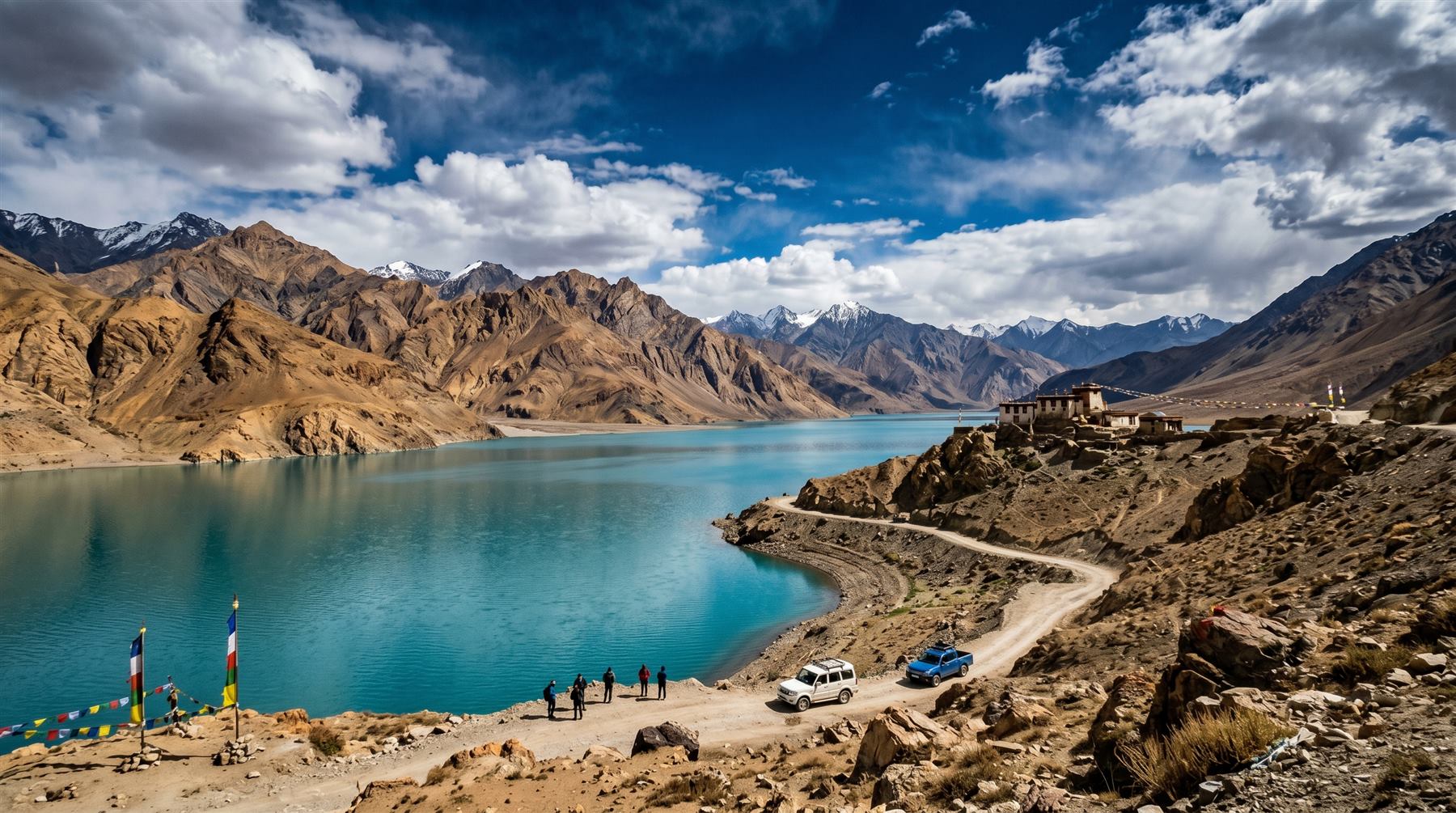
Watch the water shift from sapphire to emerald at 4,350 m — the lake that changes colour with the light.
Desert meets Himalaya — a bactrian camel ride across cold-desert dunes unlike anywhere else on earth.
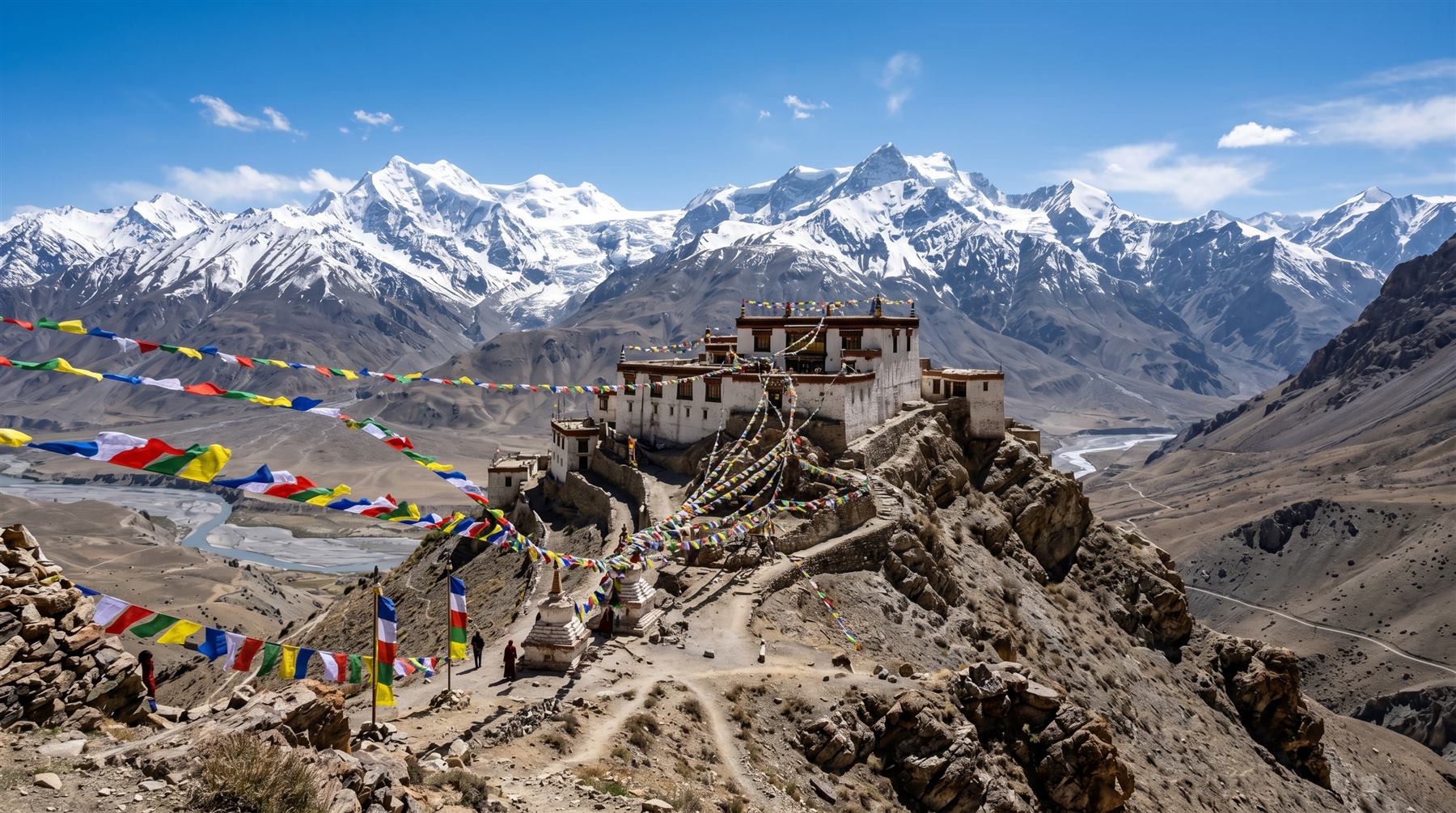
Thiksey, Diskit, Hemis — centuries-old gompas filled with butter lamps, thangkas and high-altitude calm.
All inner-line permits processed before you land — and portable oxygen is carried on every SUV transfer.
Day 1 is a mandatory rest day at Leh. Every subsequent ascent is paced to let your body adapt safely.
Land at Leh Kushok Bakula Airport (3,524 m), meet your driver and check in. Spend the day resting and hydrating — this mandatory acclimatisation day is the most important investment you make in the entire trip.
Explore Leh at a gentle pace — Shanti Stupa at sunrise, the nine-storey Leh Palace, Namgyal Tsemo monastery, Sankar Gompa and the bustling old bazaar. An easy, rewarding day that continues your body's adjustment to altitude.
Drive over Khardung La (5,359 m) — pause at the summit, photograph the prayer flags against a cobalt sky, then descend into the stark beauty of Nubra Valley. Check in to your camp as the Shyok River glints below.
Morning camel ride across the cold-desert dunes at Hunder, then visit Diskit Monastery with its giant Maitreya Buddha overlooking the valley. In the afternoon, drive the remote route to Pangong Tso for an unforgettable lakeside evening.
Wake before dawn as the lake ignites in gold and pink. Spend the morning watching the water cycle through its palette of blues — no agenda, no rush. The afternoon is yours to walk the shore, read or simply absorb the silence at 4,350 m.
Cross Chang La (5,360 m), the third-highest motorable pass in the world, and stop at Thiksey Monastery — one of Ladakh's most photogenic gompas, perched on a hilltop like a mini-Potala. Arrive back in Leh by evening.
After a leisurely breakfast, your driver transfers you to Leh Kushok Bakula Airport for your onward flight. Seven days, three high passes, one lake that changes colour and memories that will last considerably longer.
Good to know
June to September is the sweet spot — mountain roads are open, Pangong Tso is accessible and the skies are crystal clear. July and August bring the warmest days; June and September offer thinner crowds and vivid, washed light. We close the season once the passes start closing in October.
Altitude sickness is a real risk at 3,500 m and above, but it is largely preventable with proper pacing. Day 1 is a mandatory rest day at Leh — no sightseeing, no climbing. We build every subsequent ascent gradually, carry portable oxygen cylinders in each SUV and partner with local medical facilities. Most guests acclimatise well and enjoy the full itinerary without incident.
Yes — all inner-line permits required to enter restricted areas such as Nubra Valley and Pangong Tso are applied for and handled by Trusted Trails before your trip begins. You just need to carry a copy of your government-issued ID. There is nothing to queue for, fill in or chase up at the checkposts.
Absolutely — a biking expedition is one of our most requested variants. We arrange Royal Enfield or Himalayan rentals, a support SUV with camping gear, off-beat routes via Tso Moriri and the Hanle Dark Sky Reserve, and roadside mechanics for the inevitable tyre situation. Share your group size and riding experience and we will build a custom proposal.
Words from the trail
Ladakh was a dream. Bike permits, oxygen, the lot — sorted before we even asked. The WhatsApp support on the ground is what sets them apart.